
Class 7 Science
Final Series Revision
Important Questions Answers Set 12.F
Q.1. Which of these is NOT a standard unit in the SI system?
(a) metre
(b) gram
(c) second
(d) kelvin
Ans: (b) gram
The standard unit of length is metre, standard unit of time is second and standard unit of temperature is kelvin. The standard unit of mass is kilogram and not gram.
Q.2. A convex lens works as a magnifying glass when the object is kept
(a) very far away
(b) at the focus
(c) between the lens and focus
(d) beyond the focus
Ans: (c) between the lens and focus
A convex lens works as magnifying glass when the object is kept between the lens and focus.
Q.3. Which of these colours is not present in a spectrum formed by which light?
(a) blue
(b) brown
(c) violet
(d) orange
Ans: (b) brown
Ordinary white light is made up of seven colours - violet, indigo, blue, green, yellow, orange and red.
Q.4. You want to make an electric circuit in which electric current makes a bulb glow. Which of the following is not absolutely necessary in the circuit?
(a) connecting wires
(b) switch
(c) electric cell
(d) electric bulb
Ans: (b) switch
In an electric circuit, switch is used to put on or off a bulb. Since, we want to make an electric circuit in which electric current makes a bulb glow, switch is not required.
Q.5. In which of these processes in plants is water not required?
(a) germination
(b) transportation of nutrients
(c) respiration
(d) photosynthesis
Ans: (c) respiration
Water is not required for respiration in plants.
Q.6. Which of these is not a product of forests?
(a) food grains
(b) timber
(c) paper
(d) medicinal plants
Ans: (a) food grains
Food grains are product of agriculture and not forests.
Q.7. In which part of the wastewater treatment plant are oil and grease removed from water?
(a) grit chamber
(b) clarifier
(c) aeration tank
(d) vertical bars
Ans: (b) clarifier
During wastewater treatment, wastewater passes through a sedimentation tank called clarifier in which floating materials such as oil and grease are removed with the help of a skimmer.
Q.8. Which of these life processes provides us with energy?
(a) Digestion
(b) Respiration
(c) Both digestion and respiration
(d) Reproduction
Ans: c. Both digestion and respiration
Digestion and respiration provide the energy required for different life processes.
Q.9. Which of these is a mixture?
(a) Common salt
(b) Oxygen
(c) Tap water
(d) Iron sulphide
Ans: Tap water is a mixture as it contains impurities i.e., hard water.
Hard water contains calcium and magnesium as impurities.
Common salt and iron sulphide are compounds while oxygen is a molecule.
Hence, the correct answer is option "C".
Q.10. Silk is obtained from:
(a) sheep
(b) rabbits
(c) certain caterpillars
(d) bees
Ans: Silk is obtained by boiling cocoons of caterpillars.
Hence, the correct answer is option "C".
Q.11. If you suffer from acidity in the stomach, the doctor gives you a medicine to relieve your discomfort. The medicine has:
a. common salt
b. hydrochloric acid
c. sodium hydroxide
d. magnesium hydroxide
Ans: If you suffer from acidity in the stomach, then the doctor suggests milk of magnesia (which is chemically known as magnesium hydroxide) to relieve your discomfort.
Hence, the correct answer is option "D".
Q.12. Animals living in what kind of climate have a thick layer of fat or fur on their bodies?
a. Cold climate
b. Hot and dry climate
c. Hot and wet climate
d. All of these
Ans: a. Cold climate
Animals living in cold climate have a thick layer of fat or fur to prevent heat loss from the body.
Q.13. Which of these is not a property of respiration?
(a) It occurs at high temperature.
(b) It occurs only in living cells.
(c) It releases energy in steps.
(d) It is a slower process than combustion.
Ans: (a) It occurs at high temperature.
Respiration occurs only in living cells. It releases energy in steps and is a slower process than combustion.
Q.14. Through which of these does exchange of gases and digested food occur between blood and the surrounding cells?
(a) arteries
(b) veins
(c) capillaries
(d) all of these
Ans: (c) capillaries
Capillaries are the thinnest blood vessels through which exchange of gases and digested food occurs between blood and the surrounding cells.
Q.15. Which of the following is not necessary for a seed to start germinating?
(a) water
(b) air
(c) light
(d) warmth
Ans: (c) light
To start germinating, seed requires water, air and warmth.
Q.16. Name the substance present in the leaves of green plants that traps sunlight to provide energy for making food.
Ans: Chlorophyll is present in the leaves of green plants that traps sunlight to provide energy for making food.
Q.17. Fill in the blanks: If we want to find how hot or cold something is, we find its ___________
Ans: The degree of hotness or coldness of a body is determined by its temperature. So, if we want to find how hot or cold something is, we will find its temperature.
Q.18. In one method of sewage treatment, the sewage flows into a _______ tank in which anaerobic bacteria decompose the waste.
Ans: In one method of sewage treatment, the sewage flows into a settling tank in which anaerobic bacteria decompose the waste.
Q.19. Which class of chemical substances always taste sour?
Ans: Chemical substances having acidic nature always taste sour.
Q.20. A substance undergoes a change in which its molecules undergo changes. What kind of change is it - physical or chemical?
Ans: When a substance undergoes a change in which its molecules undergo changes it shows that it is a chemical change.
Q.21. Which body process is responsible for releasing energy from food?
Ans: Energy is released from digested food through the process of respiration. During respiration, the nutrients of the digested food react with oxygen in the body cells to release energy.
Q.22. If reproduction in a plant occurs without seeds, is it sexual or asexual reproduction?
Ans: If reproduction in a plant occurs without seeds, it is called an asexual reproduction.
Q.23. A weight is tied to a string. The other end of the string is fixed to a support. If the weight is given a push, what kind of motion is observed in it?
Ans: Uniform motion is observed because the time taken for one to-and-fro movement is always the same.
Q.24. What kind of image does a cinema projector make-real or virtual?
Ans: A cinema projector creates a real image and it is formed on a screen.
Q.25. Is the sun an exhaustible renewable resource or an inexhaustible renewable resource?
Ans: Sun is an example of inexhaustible renewable resource.
Q.26. Name any four organs of the human digestive systems.
Ans:
1. Oesophagus or Food Pipe
2. Stomach
3. Small Intestine
4. Large Intestine
Q.27. How does exchange of gases for respiration occur in insects?
Ans: Insects have openings called spiracles on their bodies. Air enters through these openings and reaches all parts of the body through respiratory tubes called trachea and their branches called tracheoles.
Q.28. How does transpiration help plants in transportation of water from the roots up the stem?
Ans: Transpiration of water from leaves creates a suction pull which pulls water up to the plant from the roots. This pull is strong enough to force water up high trees.
Q.29. What is a nephron?
Ans: Nephrons are the tiny filtering units of the kidney. They filter out excess water, salts and urea from the blood when it passes through them. Each kidney contains about one million nephrons.
Q.30. If a car takes 45 minutes to travel from point A to point B at a uniform speed of 60 km/h, what is the distance from A to B?
Ans: Time taken = 45 min = 3/4 h, Speed = 60 km/h
Distance from point A to B = Speed × Time = 60 × 3/4 = 45 km
Q.31. Why do high speed winds often lift off roofs of houses with tin or thatch roofs?
Ans: High-speed winds reduce the air pressure on the top of the roof, whereas the air pressure below the roof remains the same. Hence, due to this reduction in pressure, roofs of houses with tin or thatch roofs are often carried away by high-speed winds.
Q.32. What is the relation between angle of incidence and angle of reflection when a ray of light strikes a mirror?
Ans: When a ray of light strikes a mirror, the reflected ray leaves the mirror at the same angle at which the incident ray strikes. Therefore, we have:
Angle of incidence = Angle of reflection
Q.33. What is a miniature circuit breaker?
Ans: Miniature circuit breaker is a switch that automatically stops the flow of current in a circuit if the current in it exceeds the specified maximum limit.
Q.34. In what forms does water exist in nature?
Ans: In nature, water exists in all states. In the solid state, it exists as snow on high mountains. Most of the water on the earth exists in liquid form in rivers, lakes, seas, oceans, etc. In the gaseous state, water exists as water vapour in the air.
Q.35. How do forests help in maintaining the water table?
Ans: Rainwater does not collect and stagnate on the forest floor. Instead, it drips down the forest floor slowly. The water is able to seep into the soil and thus helps in maintaining the water table.
Q.36. An object is kept very far away from a convex lens and slowly brought close to it. Describe how the image formed by the lens will change.
Ans: (a) When the object is very far away from a convex lens, the image is real and inverted.
(b) As the object is brought closer to the lens, image becomes bigger and moves away further from the lens.
(c) When the object is very close to the lens, the image can no longer be formed on screen. However, an erect, magnified and virtual image can be seen on looking through the lens on the same side as the object.
Q.37. Explain, with the help of a distance-time graph, what is meant by uniform motion.
Ans:
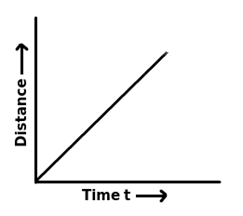
When a body travels equal distances in equal intervals of time, the body is said to be in uniform motion. A distance-time graph for the motion of a body is shown in the figure. As the graph is a straight line with a constant slope, so we can say that the body covers equal distances in equal intervals of time or simply the speed of the body is constant. Therefore, the motion is uniform motion.
Q.38. What does rainwater harvesting consist of?
Ans: Rainwater harvesting consists of conserving groundwater by allowing raindrops falling on roofs of buildings to flow into a deep trench on the ground. In this way, rainwater harvesting replenishes groundwater instead of flowing to the drains that empty into the rivers.
Q.39. Draw a labelled diagram of an electric bell.
Ans:
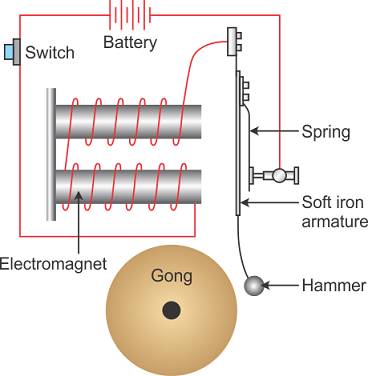
Electric Bell
Q.40. Describe the process of cellular respiration.
Ans: Cellular respiration uses oxygen to break down food to release energy. It occurs in body cells. The sugar molecules in food are oxidised to form carbon dioxide and water and energy is released. This oxidation reaction is as follows:
C6H12O6 + 6O2 → 6CO2 + 6H2O + Energy
Glucose Oxygen Carbon dioxide Water
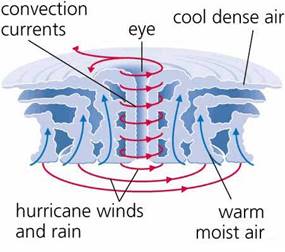
Q.41. Describe the structure of a cyclone.
Ans: A cyclone consists of a low-pressure region with higher pressure all around. The winds tend to blow towards the low-pressure region and circulate violently around the centre with great speed. At the centre of the cyclone, there exists a calm and cloudless area called eye. There is no rain here and the winds are fairly light. The strongest winds and heaviest rains are formed in the thick clouds around the eye.
Online Tuitions & Self-Study Courses for Grade 6 to 12 & JEE / NEET