
Weather is defined as day-to-day condition of the atmosphere at a place with respect to the temperature, humidity, rainfall, wind speed, etc.
Elements of Weather
The temperature, humidity, rainfall, and wind are called the elements of the weather which are described below:
1. Temperature
The heat from the sun is absorbed by the earth's surface, oceans and atmosphere which plays an important role in determining the weather of any place.
Change in weather is caused due to the sun because the changes occurring in the sun's heat change the atmosphere more frequently. The time of sunrise and sunset also changes throughout the year.
2. Humidity and rainfall
Humidity refers to the amount of water vapour present in air.
Humidity indicates the likelihood of precipitation.
A device used to measure humidity is called as psychrometer or hygrometer.
Humidity is also measured on a global scale using remotely placed satellites.
The greater the humidity, more are the chances of rain.
Rainfall is measured by an instrument called rain gauge, which is basically a measuring cylinder with a funnel on top to collect rainwater.
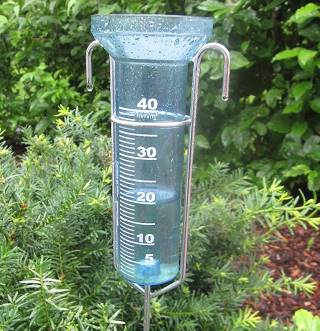
In India, rain is mainly brought by two kinds of humidity-laden winds. These are the southwest monsoon (June to September), which brings heavy rain to most parts of the country, and the northeast monsoon (November to March), which brings relatively lighter rain.
3. Wind
Wind is moving air. Wind affects the weather of a place to a great extent. It can bring rain clouds to a place or blow them away. During the southwest monsoon period, humidity-laden winds from the Indian ocean and Bay of Bengal bring rain to India. During winters, when the winds blow from the mountains of north India towards the northern plains, the plains become very cold. During summers, the winds blow from the hot desert of Rajasthan towards Delhi, and Delhi becomes very hot.
Weather Prediction
The prediction of weather is done by the scientists, called meteorologists, who study the changes in weather. The weather is predicted by studying the patterns of weather and factors affecting them. The science which deals with the study of weather is called meteorology.
In India, the weather reports are prepared by the Meteorological Department of Government. This department collects the data of temperature, humidity, wind, etc., and predicts weather on television or radio or newspaper.
Difference in Time of Sunrise and Sunset
There is the difference in the time of sunrise during summer and winter. In summer the sun rises earlier in the morning and sets late in the evening during the month of June, while sun rises late and sets early in the month of December.
Therefore, days are longer and night shorter in summers while days are shorter and night longer during winter.
Climate
The average weather pattern taken over a long time, is called the climate of that place. Different places in the world have different types of climate. The annual record of long-term average temperature and rainfall at a particular place is called climate chart. It gives an idea about the climate at a particular place during a specific period of the year.
The major factor which determines the climate of a place is called latitude (imaginary lines on earth).
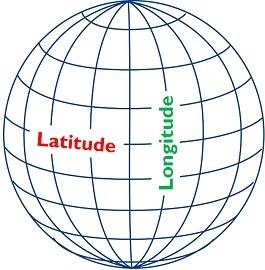
Factors that Determine the Climate
The several factors that determine the climate at a place are
(i) Distance from the sea: Climate of a place varies according to the closeness of the sea. The places that are near the sea, are moderate (not too hot nor too cold), e.g., Mumbai, Chennai. The places that are away from the sea have extreme climate, having very hot summer or too cold winter, e.g., Delhi.
(ii) Altitude or height above sea level: Climate also varies according to the altitude. The higher altitudes are cooler, e.g., Himalaya.
(iii) Humidity: It also determine the climate of a place. Kolkata and Kerala have high humidity, while Rajasthan and Haryana have low humidity.
Climates in India
The climate of India varies in different regions. These can be described as below:
(i) Northern region of Himalayas has cold and moderately wet climate (e.g., Kashmir).
(ii) Plains have moderately hot and wet climate (e.g., Uttar Pradesh).
(iii) South has very hot and wet climate (e.g., Kerala).
(iv) Western region has hot and dry climate (e.g., Rajasthan).
(v) North-Eastern India has wet climate (e.g., Assam) and receives rain for a major part of the year.
Climate and Adaptation
The ability of an organism to develop certain features which improve the chances of its survival in the environment in which they live, is known as adaptation.
Animals are adapted to survive in the conditions in which they live. In other words, an adaptation is a trait of an organism that has been favoured by natural selection.
Adaptations are of three types:
(i) Structural adaptations Adaptation of special body parts of an organism that helps it to survive in its natural habitat, e.g., skin colour, shape, body covering.
(ii) Behavioural adaptations Adaptation of special ways in a particular organism that helps it to survive in its natural habitat. It usually occurs in response to some external stimuli, e.g., frogs and bear undergoes hibernation or winter sleep during hard. winter season.
(iii) Physiological adaptations Adaptation of body systems presents in an organism that allows it to perform certain biochemical reaction, e.g., warm blooded animals are able to keep a constant body temperature.
Animals that live in a very cold or hot climate must possess special features to protect themselves against extreme cold or heat. The features and habits that help an animal to adapt to their surrounding are a result of the process of evolution. According to their habitat animals adapt themselves. These animals may be grouped as polar region and tropical rainforest animals.
The Polar Regions
The polar regions as the name suggest are situated near the poles, i.e., north pole and south pole. The countries that belong to the polar regions are Canada, Greenland, Iceland, Norway, Sweden, Finland, Alaska in USA and Siberian region of Russia.
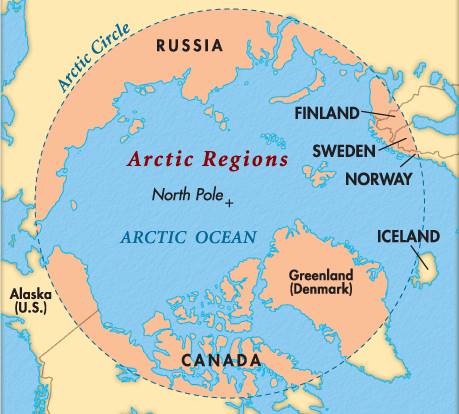
Polar regions show extremely colder climate which is covered with snow and remain cold for most part of the year. In this region, the sun does not set for six months and even does not rise for other six months. The temperature goes down below -37℃, during winters in polar regions. The ground remains frozen most of the year and water becomes available only during the short summer when snow melts. Mosses and short-lived flowering plants grow in these regions.
Animals living in these regions are adapted in different ways to cope with the conditions of temperature, light and moisture and also according to the availability of food in that region. Polar bears and penguins are the animals that live in polar region. Besides these whales, seals are the other animals are also found in polar regions. Some fishes, foxes, musk oxen, reindeer and birds also live in polar regions.
Adaptations in Polar Bear
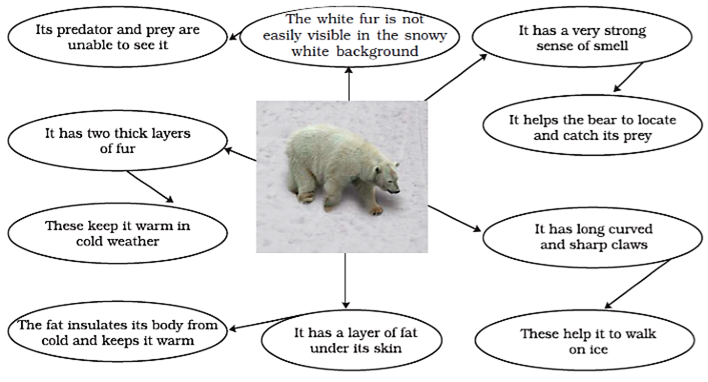
Polar bear is a large and white bear that lives in north polar region of the earth. The polar bear mainly feeds on fishes and seal and can survive in extremely cold climate of polar regions due to the following adaptations:
(i) Their body is covered by a thick coat of white fur. It helps them to blend with their surrounding snow white back ground and cannot be noticed by their predators. Beneath the fur is a thick coat of fat which insulates the body from cold and keeps the bear warm.
(ii) Polar bear is a good swimmer which has wide and large paws that help it to swim. These paws also help bear to walk on the snow easily
(iii) They have a strong sense of smell so that they can locate their prey easily They also possess small ears to keep the body surface area to the minimum and reduce the heat loss from the body.
(iv) The thick layer of fat beneath the skin also stores food in winter when food is scarce. This stored food (fat) also helps the mother polar bear to survive in the winter when they undergo hibernation beneath the snow with their new-born cubs.
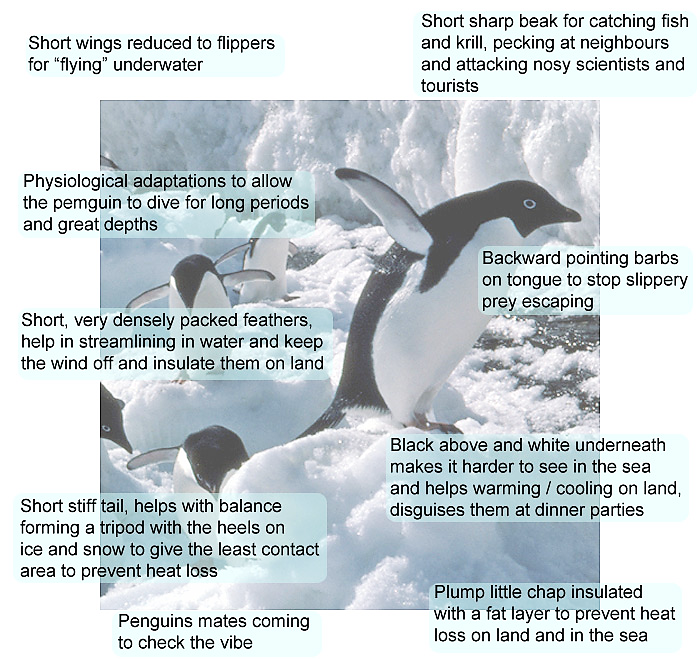
Adaptations in Penguins
Another well-known animal living in the polar regions is the penguin which can survive due to the following adaptations:
(i) These are black and white in colour which merge well with the white background of ice and snow.
(ii) They have thick skin and a thick layer of fat below their skin which protects them from extreme cold.
(iii) They possess streamlined body, flipper-like wings and webbed feet which make it a good swimmer. This adaptation helps penguin to catch fish as prey
(iv) They live together in large numbers and huddle together to keep themselves warm.
The Tropical Rainforest
The tropical region lies near both the sides of equator line on the earth. These regions are hot but get plenty of rainfall. Therefore, this region is humid. Even in coldest month, the temperature is generally higher than about l5°C.
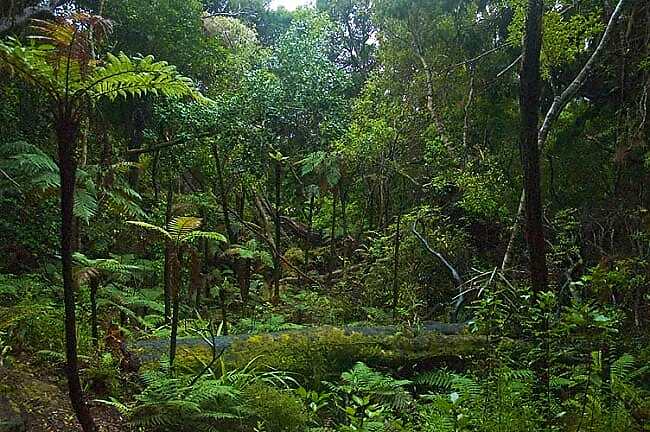
During hot summers, the temperature may cross 40°C. Days and nights are almost equal in length throughout the year. Tropical rainforest is the important feature of tropical region. These regions are rich in vegetation and large diversity in animals is also seen in this region.
In India, tropical rainforests are found in Western Ghats and Assam. other countries of the world like South, East Asia, Central America, Malaysia, Indonesia, Brazil, Republic of Congo, Kenya, Uganda, Nigeria and Central Africa also have tropical rainforest. The major type of animals living in the rainforest are monkeys, apes, gorillas, tigers, elephants, leopards, lizards, snakes, birds and insects.
There is an intense competition for food and shelter among these animals. So, the animals are adapted in such a way that they eat different kinds of food and live in different kinds of places to overcome competition for food and shelter respectively. The adaptations in different animals living in tropical rainforests are discussed as follows.
Adaptations in Red-eyed Frog
The red-eyed frog lives on trees in tropical rainforest. They have sticky pads on their feet that help them to climb trees. It does not live in water and has a green back and a creamy underside. It has big and bulging bright-red eyes and it is a nocturnal. It sleeps during the day and becomes active during night and feeds on the insects present on the tree.
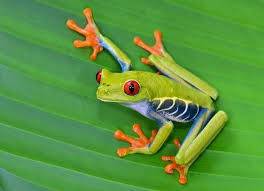
The bulging eye of frog protects it from its predator. The sudden opening of big and bright-red eyes frightens the predator for a while and in the meantime the frog gets time to jump to a safe place. The green colour of the frog helps it to hide within the green leaves of the tree and helps it to protect from predators.
Adaptations in Monkey
The monkeys living in tropical rainforests have long tails for grasping branches. Their hands and feet are adapted in such a way that they can easily hold the branches of trees.
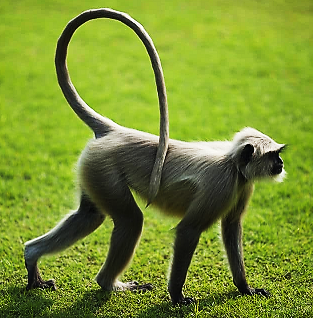
The eyesight of monkeys is very good which helps them in leaping between the branches to escape from their predators. Monkeys eat fruits, seeds, leaves, root and insects as their food which is present in abundance in tropical rainforest.
Adaptations in Lion-Tailed Macaque
It is also called as beard ape and lives in the rainforest of Western Ghats in India. It has silver-white mane which surrounds the head from the cheeks down to its chin which is the specific characteristic of this animal. It is called lion-tailed because its tail is like that of lion having bunch or tuft of hair at the end.
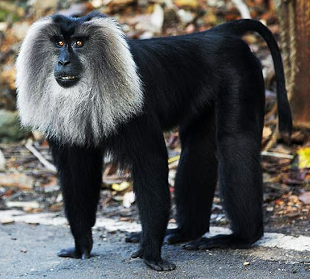
They spend most of their time feeding in the upper canopy of trees (i.e., arboreal animal). It mainly feeds on fruits, seeds, young leaves, stems, flowers and buds. They also can eat insects present under the bark of the tree. Since, it is able to get sufficient food on trees. It rarely comes down on the ground and spends a major part of its life on the tree.
It is a good climber with its hand and feet adapted to hold the branches of trees firmly.
Adaptation in Toucan
Toucan is a bird, which is found in tropical rainforest and which possesses a long strong and large beak. This bird is adapted for tropical rainforest in several ways. It is colourful bird which possesses a strange beak. It lives most of the time in the holes of big trees.
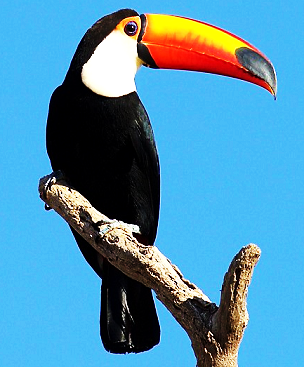
The long and large beak helps Toucan to reach the fruits attached to the ends of even thin branches of tree that are weak enough to support its weight. It is an adaptation of this bird to get the unreachable fruits. Its large beak also helps in temporary storage of fruits which is collected by Toucan. These possess feet that are adapted for grasping the branches of trees firmly. Toucan can change the colour of its feather, so as to get mixed up with the surrounding and they are not easily noticed by predators and remain safe.
Adaptations in Lion and Tiger
These are also called as big cats and are carnivore which eat only flesh of other animals. These have following adaptations to survive in tropical rainforest:
(i) They have thick skin and skin colour helps them to camouflage (ability of the animal to match their surroundings, e.g., chameleon, butterfly). The yellow brown colour of lion and black stripes of tiger helps them to hide in the forest by blending with the surroundings. It helps these carnivores to catch their prey.
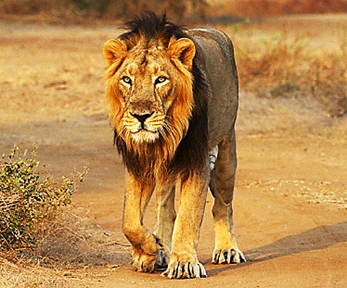
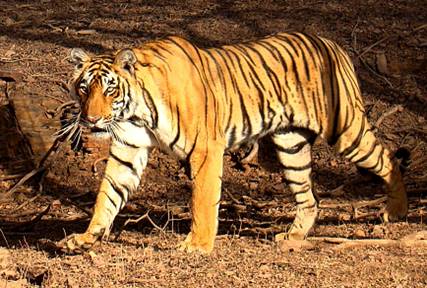
(ii) They have strong sense of smell which helps them to locate their prey.
(iii) They also develop sensitive hearing capacity to find its prey.
(iv) They have eyes in front of their head which enable them to have a correct idea of the location of their prey. They also have good eyesight.
(v) Their strong legs help them to run fast and long, sharp and strong claws in front of their legs help them to catch and tear their prey.
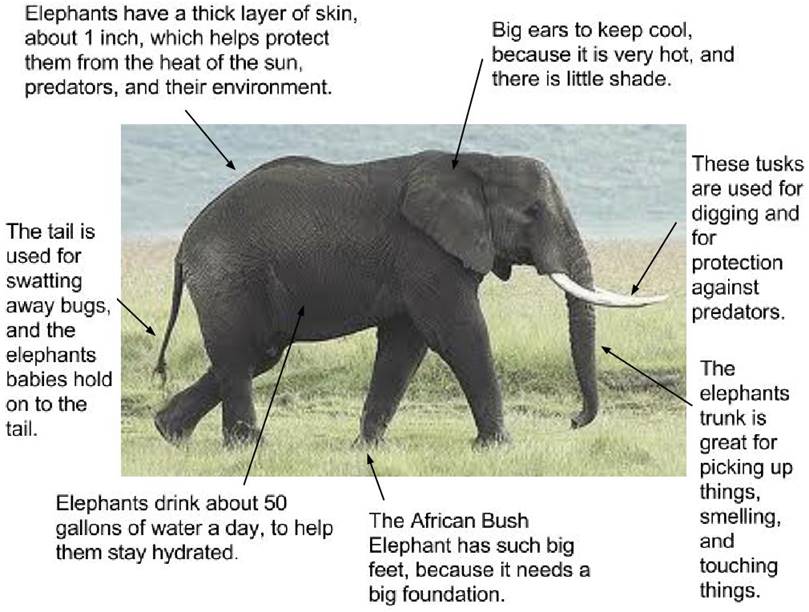
Adaptations in Elephant
Elephant is a well-known animal of Indian tropical rainforest. These are plant eaters and are adapted in many remarkable ways to survive in tropical rainforest. These adaptations can be discussed as follows:
(i) The elephant has a long trunk which is used as nose and has a strong sense of smell. It also helps elephant to pick up the food. The long trunk is also used for breathing. It can reach up to the branches of trees and help it to eat tree leaves. It is used for Sucking water from lakes or rivers (drinking).
(ii) The elephant possesses tusks (long pointed teeth) that are used in tearing the bark of trees which the elephant loves to eat as food. It also helps elephant to fight their enemies and protecting themselves.
(iii) The elephant has large ears that help it to hear even very soft sounds and can sense the danger. It also helps the elephant to keep it cool in the hot and humid climate of the tropical forest.
(iv) The feet of elephant are large and round which help it to provide good stability and also prevent it from sinking into soft ground due to its heavy weight.
Migration
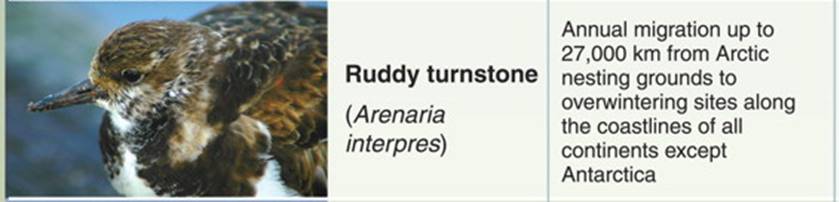
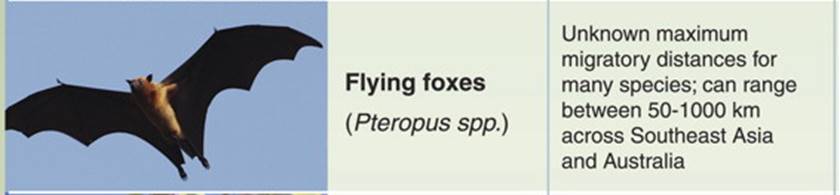
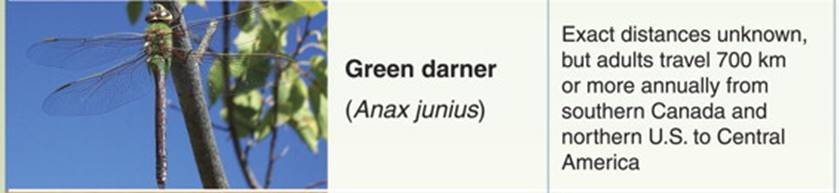
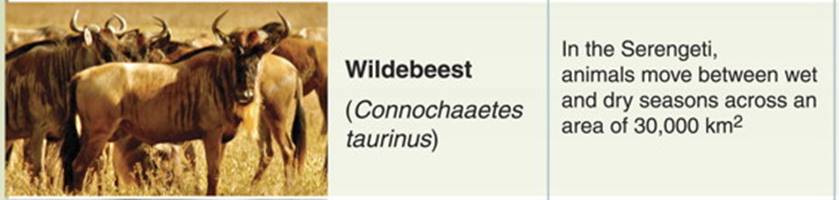
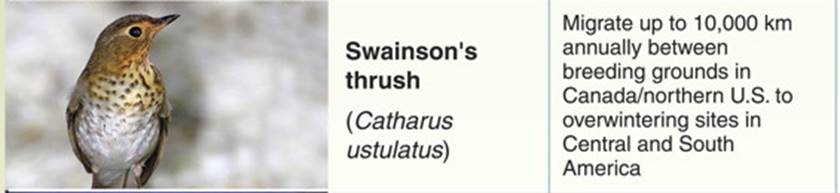
Migration is the seasonal journey taken by different animals or birds to escape the extreme climatic condition and the search of food, e.g., Siberian cranes migrates towards warmer region in the autumn by travelling several thousands of kilometres. They are seen in the Bharatpur, Rajasthan and Sultanpur, Haryana and sometimes in wetland of North-East and other parts of India.
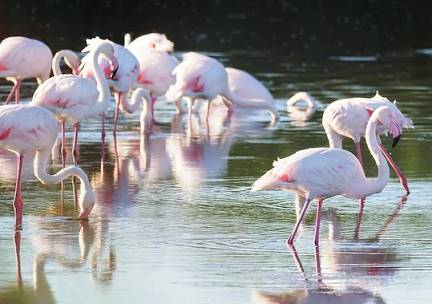
Migratory birds sometimes travel as much as 15000 km to escape the extreme climatic condition of their habitat.
These birds fly high where the wind flow is helpful and cold conditions allow them to disperse the heat generated by their flight muscles.
These birds have a built-in sense of direction and know in which direction they have to travel. Some birds use landmarks to guide them.
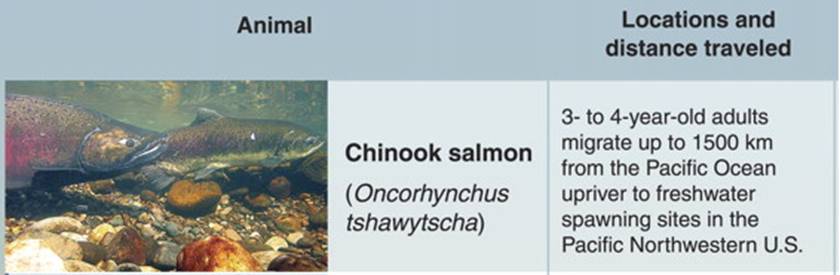
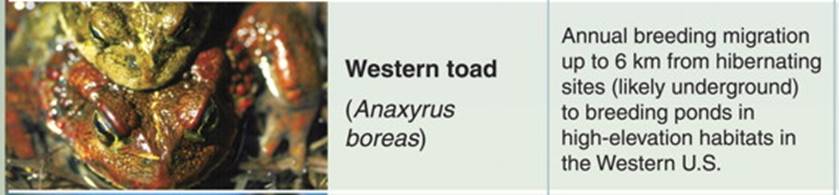
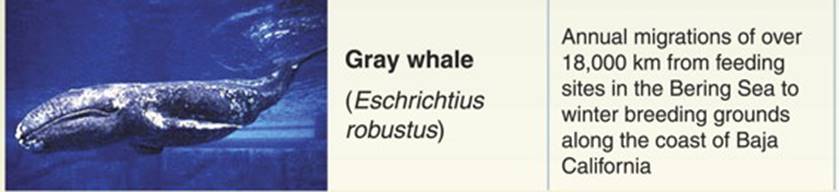
Some birds are guided by the sun during daytime and by stars during night. Some birds can use the magnetic field of the earth to find the direction. Besides birds some fishes, insects and mammals also migrate seasonally in search of more hospitable climates.
Olympiad Specific

Online Tuitions and Self-Study Courses for Grade 6 to 12 & JEE / NEET