
Solid Shapes
· Solid shapes are 3 dimensional ( or 3D) shapes, i.e., these have length, breadth (or width) and depth (or height).
· Examples: Cuboids, Cylinders, Spheres and Pyramids.
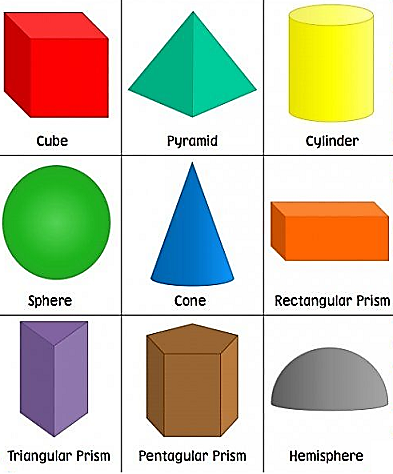
Visualising solid shapes
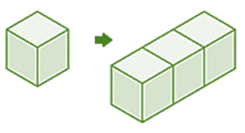
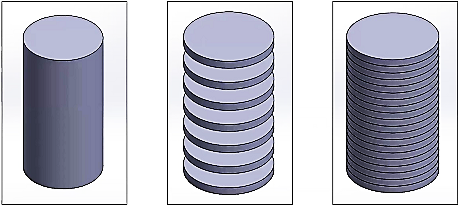
· Solid shapes can be formed by placing some smaller solid shapes side by side to form a new solid shape.
· Example:
(i) A cylinder is formed by stacking up circles vertically.
(ii) Cubes can be formed by placing cubes side by side.
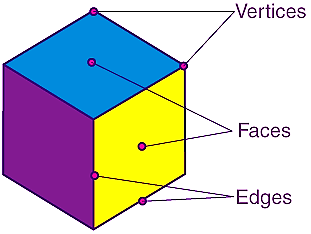
Three-dimensional figures have different numbers of faces, edges and vertices. All the flat surfaces of the figure are called faces, these faces are 2-D shapes.
The line segment where the faces of three-dimensional figures meet each other is called the edge of the shape.
The corners or points where the edges of the figure meet each other are called vertices (if one such point is there, then it is called a vertex).
Visualising solid objects by viewing the smallest unit
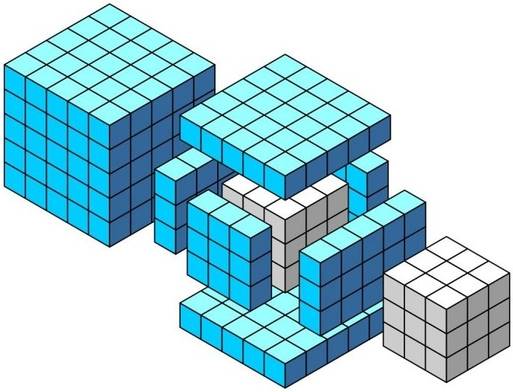
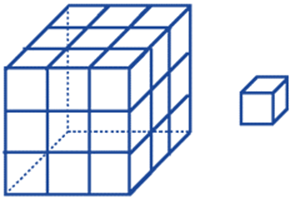
· A solid can be visualised by breaking it down to the smallest unit.
· For example, a cube of dimensions (3cm x 3cm x 3cm) can be made up of 27 small cubes of dimensions (1cm x 1cm x 1cm).
Viewing sections of a solid by slicing or cutting
· If we cut or slice a solid we get to view the cross-section.
· Example: If a loaf of bread is cut vertically, then the cross-section is almost a square. But if it is cut or sliced horizontally, the cross-section is a rectangle.
· Similarly, other solid shapes can be sliced in order to find their 2D cross-sectional shapes.
Viewing sections of a solid by using shadows
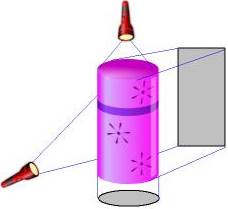
· Shadows can be used to view 3D objects as 2D shapes.
· Example: The shadows of a cylinder are shown below.
Different views of a Solid
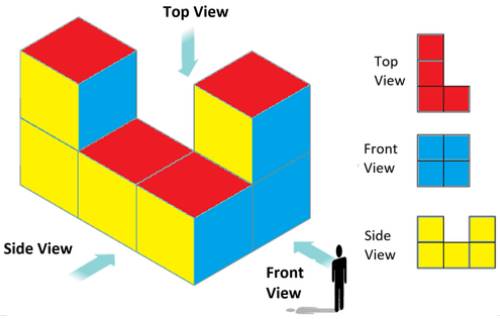
· A solid can be visualised by looking at it from different angles, namely: (i) Front view (ii) Top view (iii) Side view.
· Example: The different views of a figure are shown below.
Faces, edges and vertices
· The corners of a solid shape are called its vertices.
· The line segment joining two vertices is called an edge, or when two planes of a solid meet it forms an edge.
· The surfaces of a solid shape are called as its face.
The table below shows the number of faces, edges and vertices some solid shapes have.
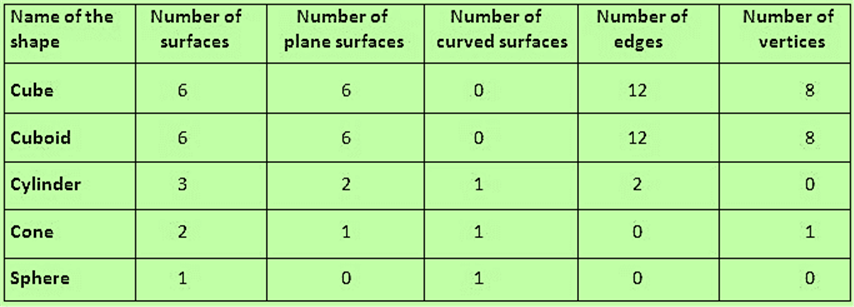
Three-dimensional shapes are further classified into two types.
1. Polyhedrons (or regular polyhedrons)
2. Three-dimensional figures with curved surfaces
Polyhedrons, Prism and Pyramid
|
Name |
Shape |
Properties |
|
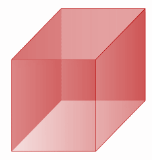
Cube |
|
Faces = 6 Edges = 12 Vertices =8 |
|
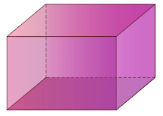
Cuboid |
|
Faces = 6 Edges = 12 Vertices =8 |
|
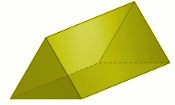
Prism (Triangular prism) |
|
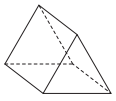
Faces = 5 Edges = 9 Vertices = 6 |
|
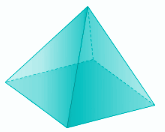
Pyramid (square based pyramid) |
|
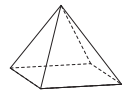
Faces = 5 Edges = 8 Vertices = 5 |
|
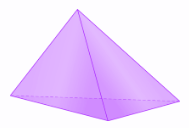
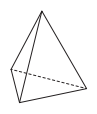
Triangular pyramid |
|
Faces = 4 Edges = 6 Vertices = 4 |
Three-dimensional figures with curved faces
|
Name |
Shape |
Properties |
|
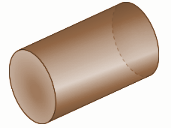
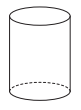
Cylinder |
|
Faces = 3 (curved faces = 1, places surfaces =2) Edges = 2 Vertices = 0 |
|
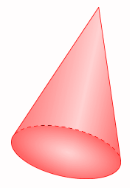
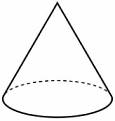
Cone |
|
Faces = 2 (curved face = 1, plane surface = 1) Edges = 2 Vertices = 1 |
|
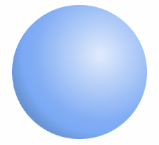
Sphere |
|
Faces = 1 (curved surface) Edges = 0 Vertices = 0 |
Nets of Solid Shapes
Building 3-D objects
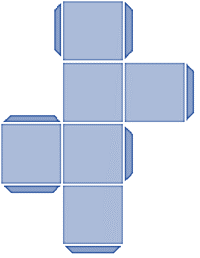
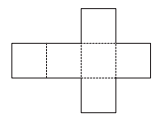
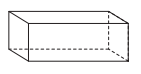
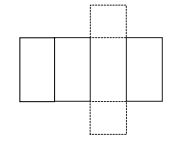
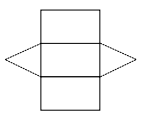
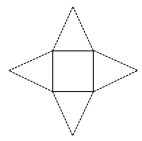
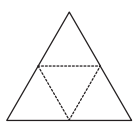
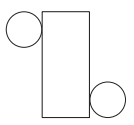
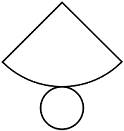
A net is a flattened out skeletal outline or a blueprint of a solid which can be folded along the edges to create solid. The same solid can have multiple nets.
Example: A net for a cube box.
|
Shape |
Solid |
Net |
|
Cube |
|
|
|
Cuboid |
|
|
|
Triangular prism |
|
|
|
Square pyramid |
|
|
|
Triangular pyramid |
|
|
|
Cylinder |
|
|
|
Cone |
|
|

Representing 3D Shapes on a Paper
Obliques sketches
· Oblique sketches do not have the exact length of a solid shape but appears exactly like the solid shape.
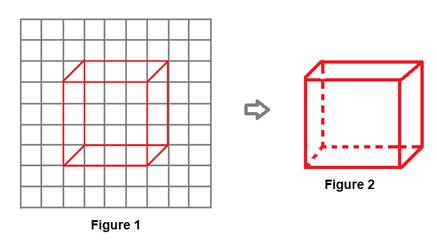
· Example: Drawing an oblique sketch of a cube:
· Step 1: Draw the front and the opposite faces.
· Step 2: Join the corresponding corners. (Figure 1)
· Step 3: Redraw using dotted lines for hidden edges. (Figure 2)
This gives the oblique sketch of the cube.
Isometric sketches
· Isometric sketches have measurements equal to that of the solid.
· They are usually drawn on an isometric dotted paper.
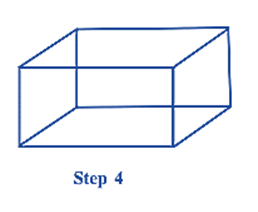
· Example: Drawing an isometric sketch of a cuboid of dimensions 4 × 3 × 3:
Step 1: Draw a rectangle to show the front face of the cuboid.
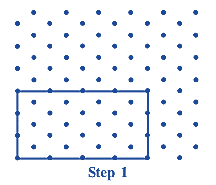
Step 2: Draw four parallel line segments of length three starting from the four corners of the rectangle.
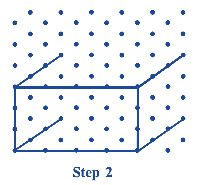
Step 3: Connect the corresponding corners using appropriate line segments.
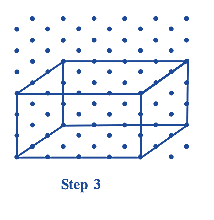
Step 4: The figure thus obtained is the isometric sketch of the cuboid.
Online Tuitions and Self-Study Courses for Grade 6 to 12 & JEE / NEET