
Class 11 Chemistry
Final Series Important Practice Questions – Set 1W
Q.1. State the law of constant composition.
Q.2. Why is the molality of solution independent of temperature?
Q.3. Predict the sign of ∆S for the following reaction:
CaCO3(s)  CaO(s)
+ CO2(g)
CaO(s)
+ CO2(g)
Q.4. State Hess's law.
Q.5. Define:
(a) standard enthalpy of formation.
(b) standard enthalpy of neutralisation.
Q.6. Which of the following ions is smallest, why?
N3−, O2−, F−
Q.7. Write ideal gas equation for 'n' moles of gas.
Q.8. Write the conjugate bases for NH4+, HCO3−.
Q.9. Write the structural formula of 2-methylcyclohexanone.
Q.10. Why is the staggered conformation of ethane more stable than eclipsed conformation?
Q.11. Calculate the bond order of N2 and N2+ and compare their stability.
Q.12. Why is Na2O2 diamagnetic in nature?
Q.13. Why is potassium more reactive than sodium?
Q.14. In Carius method of estimation of halogen, 0.30 g of an organic compound gave 0.24 g of AgBr. Find out the percentage of bromine in the compound.
[Mol. mass of AgBr = 188 g mol−1, At. mass of Br = 80 g mol−1]
Q.15. 10 g of Ag reacts with 1 g of S. Calculate the mass of Ag2S formed. Will any of the two reactants remain unreacted? If yes, which one and what would be its mass?
[Atomic mass of Ag = 108 u, S = 32 u]
Q.16. Which series of lines of the hydrogen spectrum lies in UV region?
Q.17. The mass of electron is 9.1 × 10⁻³¹ kg. If its K.E. is 3 × 10⁻²⁵ J, calculate its wavelength. (h = 6.626 × 10⁻³⁴ J s).
Q.18. Define Hund's rule.
Q.19. Write the electronic configuration of Cr3+ (24).
Q.20. Define Pauli's exclusion principle.
Q.21. Why are cations smaller than neutral atoms?
Q.22. Why Fluorine has lower electron gain enthalpy than chlorine?
Q.23. Sulphur has lesser ionisation enthalpy than phosphorus.
Q.24. Which of the following has minimum bond angle?
H2O, CO2, NH3, CH4
Q.25. Why is σ-bond stronger than π-bond?
Q.26. How many σ and π-bonds are present in the following compound:

Q.27. Define Critical temperature.
Q.28. Define Avogadro law.
Q.29. Define Charles' law.
Q.30. Define most probable velocity.
Q.31. Calculate the temperature at which the average speed of oxygen equals to that of hydrogen at 20 K.
Q.32. What is the oxidation number of Cr in K2Cr2O7?
Q.33. Balance the following ·equation in basic medium by ion-electron method:
Zn + NO3− → Zn2+ + NH4+
Q.34. What is heavy water? Calculate the molecular weight of heavy water.
Q.35. Why should heavy water plants be near to fertilizer industry?
Q.36. Why are group 2 elements harder than group 1 elements?
Q.37. Write balanced equations for the following:
(i) KO2 and H2O
(ii) K2O and CO2
Q.38. What type of isomerism is shown by cis-2-butene and trans-2-butene?
Q.39. Why is conc. HNO3 added to sodium extract (Lassaign extract) before testing for halogens?
Q.40. What is the IUPAC name of
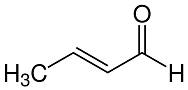
Q.41. Identify 'A' and 'B’.

Q.42. Why is acetylene more acidic than ethene?
Q.43. Which acid is not present in acid rain?
HNO3, H2SO3, H2SO4, CH3COOH, H2CO3
Q.44. CO2 is inert and harmless gas, yet it is thought to be a serious pollutant. Explain.
Q.45. How will you convert the following:
(i) Acetylene to Chlorobenzene
(ii) Ethyl bromide to Ethyne
Q.46. Give a chemical test to distinguish between hexane and hexene.
Q.47. Why does neo-pentane have lower boiling point than n-pentane?
Q.48. Why is dry ether used as solvent in Wurtz reaction?
Q.49. An alkyl halide ‘X’ (C3H7Cl) on reaction with KOH (alc.) gives alkene ‘Y’, which on reaction with water in presence of H2SO4 gives ‘Z’. ‘Z’ is also obtained from ‘X’ by reaction with aq. KOH. Identify X, Y, Z and write the reactions involved.
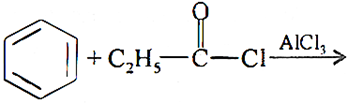
Q.50. Complete the following reaction:
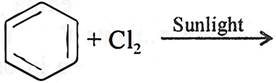
Q.51. Complete the following reaction:
Q.52. Account for the following:
(i) SiF4 forms SiF62− while CCl4 does not form CCl62−.
(ii) PbCl2 is more stable than PbCl4.
(iii)SnCl2 is solid whereas SnCl4 is liquid.
Q.53. Complete the following reactions:
(i) Si + CH3Cl
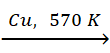
(ii) SiCl4
+ H2 
Q.54. Draw the structure of SiO42−
Q.55. Give reason:
(i) CH4 is more stable than SiH4.
(ii) CO2 is gas, SiO2 is solid.
Q.56. Complete the following reactions:
(i) Sn + Cl2 →
(ii) Al(OH)3 + NaOH →
Q.57. What is solubility product? What is the effect of temperature on Ksp?
Q.58. What do you conclude when Qc > Kc?
Q.59. What is meant by common ion effect?
Q.60. What is the effect of temperature on Kw (ionic product of water)?
Q.61. Kw of water at 373 K is. 1 × 10⁻¹². What will be the pH of H2O at 373 K? Is water acidic, basic or neutral at this temperature?
Q.62. The concentration of hydrogen ion
sample of soft drink is
4.0 × 10⁻³ M. What is its pH? [log 4 = 0.6021]
Q.63. The equilibrium constant K for reaction:
H2(g) + I2(g) ⇌ 2HI(g) is 4.
What will be K' for reaction:
HI(g) ⇌  H2(g)
+ I2(g)
H2(g)
+ I2(g)
Online Tuitions & Self-Study Courses for Grade 6 to 12 & JEE / NEET