
Class 6 Maths NCERT Solutions
Chapter 2 Whole Numbers
Exercise 2.1
Q.1: Write the next three natural numbers
after 10999.
Ans : Next three natural numbers after 10999 are
11000, 11001, 11002
Q.2: Write the three whole numbers occurring
just before 10001.
Ans : 3 whole numbers just before 10001 are
10000, 9999, 9998
Q.3: Which is the smallest whole number?
Ans : The smallest whole number is 0.
Q.4: How many whole numbers are there
between 32 and 53?
Ans : Whole numbers between 32 and 53 = 20 (53 − 32
− 1 = 20)
(33, 34, 35, 36, 37, 38, 39, 40, 41,
42, 43, 44, 45, 46, 47, 48, 49, 50, 51, 52)
Q.5: Write the successor of:
(a) 2440701
(b) 100199
(c) 1099999
(d) 2345670
Ans :
(a) 2440701 + 1 = 2440702
(b) 100199 + 1 = 100200
(c) 1099999 + 1 = 1100000
(d) 2345670 + 1 = 2345671
Q.6: Write the predecessor of:
(a) 94
(b) 10000
(c) 208090
(d) 7654321
Ans :
(a) 94 − 1 = 93
(b) 10000 − 1 = 9999
(c) 208090 − 1 =208089
(d) 7654321 − 1 = 7654320
Q.7: In each of the following pairs of
numbers, state which whole number is on the left of the other number on the
number line. Also write them with the appropriate sign (>, <) between
them.
(a) 530, 503
(b) 370, 307
(c) 98765, 56789
(d) 9830415, 10023001
Ans :
(a) 530, 503
As 530 > 503,
503 is on the left side of 530 on the number line.
(b) 370, 307
As 370 > 307,
307 is on the left side of 370 on the number line.
(c) 98765, 56789
As 98765 > 56789,
56789 is on the left side of 98765 on the number
line.
(d) 9830415, 10023001
As 98,30,415 < 1,00,23,001,
98,30,415 is on the left side of 1,00,23,001
on the number line.
Q.8: Which of the following statements are
true (T) and which are false (F)?
(a) Zero is the smallest natural
number.
(b) 400 is the predecessor of 399.
(c) Zero is the smallest whole number.
(d) 600 is the successor of 599.
(e) All natural
numbers are whole numbers.
(f) All whole numbers are natural
numbers.
(g) The predecessor of a two digit number is never a single digit number.
(h) 1 is the smallest whole number.
(i) The natural number 1 has no predecessor.
(j) The whole number 1 has no
predecessor.
(k) The whole number 13 lies between 11
and 12.
(l) The whole number 0 has no
predecessor.
(m) The successor of a two digit number is always a two digit number.
Ans :
(a) False, 0 is not a natural number.
(b) False, as predecessor of 399 is 398 (399
− 1 = 398).
(c) True
(d) True, as 599 + 1 = 600
(e) True
(f) False, as 0 is a whole number but it is not a
natural number.
(g) False, as predecessor of 10 is 9.
(h) False, 0 is the smallest whole number.
(i) True, as 0 is the predecessor of 1 but it is
not a natural number.
(j) False, as 0 is the predecessor of 1 and it is a
whole number.
(k) False, 13 does not lie in between 11 and 12.
(l) True, predecessor of 0 is −1, which is
not a whole number.
(m) False, as successor of 99 is 100.
Exercise 2.2
Q.1: Find the sum by suitable rearrangement:
(a) 837 + 208 + 363
(b) 1962 + 453 + 1538 + 647
Ans :
(a) 837 + 208 + 363
= (837 + 363) + 208
= 1200 + 208
= 1408
(b) 1962 + 453 + 1538 + 647
= (1962 + 1538) + (453 + 647)
= 3500 + 1100
= 4600
Q.2: Find the product by suitable
rearrangement:
(a) 2 × 1768 × 50
(b) 4 × 166 × 25
(c) 8 × 291 × 125
(d) 625 × 279 × 16
(e) 285 × 5 × 60
(f) 125 × 40 × 8 × 25
Ans :
(a) 2 × 1768 × 50
= 2 × 50 × 1768
= 100 × 1768 = 176800
(b) 4 × 166 × 25 = 4 × 25 × 166
= 100 × 166 = 16600
(c) 8 × 291 × 125 = 8 × 125 × 291
= 1000 × 291 = 291000
(d) 625 × 279 × 16 = 625 × 16 × 279
= 10000 × 279 = 2790000
(e) 285 × 5 × 60 = 285 × 300 = 85500
(f) 125 × 40 × 8 × 25 = 125 × 8 × 40 × 25
= 1000 × 1000 = 1000000
Q.3: Find the value of the following:
(a) 297 × 17 + 297 × 3 (b) 54279 × 92 + 8 × 54279
(c) 81265 × 169 − 81265 × 69 (d) 3845 × 5 ×
782 + 769 × 25 × 218
Ans :
(a) 297 × 17 + 297 × 3 = 297 × (17 + 3)
= 297 × 20 = 5940
(b) 54279 × 92 + 8 × 54279 = 54279 × 92 + 54279 × 8
= 54279 × (92 + 8)
= 54279 × 100 = 5427900
(c) 81265 × 169 − 81265 × 69 = 81265 × (169
− 69)
= 81265 × 100 = 8126500
(d) 3845 × 5 × 782 + 769 × 25 × 218
= 3845 × 5 × 782 + 769 × 5 × 5 × 218
= 3845 × 5 × 782 + 3845 × 5 × 218
= 3845 × 5 × (782 + 218)
= 19225 × 1000 = 19225000
Q.4: Find the product using suitable
properties.
(a) 738 × 103 (b) 854 × 102
(c) 258 × 1008 (d) 1005 × 168
Ans :
(a) 738 × 103 = 738 × (100 + 3)
= 738 × 100 + 738 × 3 [Distributive property]
= 73800 + 2214
= 76014
(b) 854 × 102 = 854 × (100 + 2)
= 854 × 100 + 854 × 2 [Distributive property]
= 85400 + 1708 = 87108
(c) 258 × 1008 = 258 × (1000 + 8)
= 258 × 1000 + 258 × 8 [Distributive property]
= 258000 + 2064 = 260064
(d) 1005 × 168 = (1000 + 5) × 168
= 1000 × 168 + 5 × 168 [Distributive property]
= 168000 + 840 = 168840
Q.5: A taxi driver filled his car petrol
tank with 40 litres of petrol on Monday. The next day, he filled the tank with
50 litres of petrol. If the petrol costs Rs 44 per litre, how much did he spend
in all on petrol?
Ans :
Quantity of petrol filled on Monday =
40 l
Quantity of petrol filled on Tuesday =
50 l
Total quantity filled = (40 + 50) l
Cost of petrol (per l) = Rs
44
Total money spent = 44 × (40 + 50)
= 44 × 90 = Rs 3960
Q.6: A vendor supplies 32 litres of milk to
a hotel in the morning and 68 litres of milk in the evening. If the milk costs
Rs 15 per litre, how much money is due to the vendor per day?
Ans :
Quantity of milk supplied in the
morning = 32 l
Quantity of milk supplied in the
evening = 68 l
Total of milk per litre = (32 +
68) l
Cost of milk per litre = Rs 15
Total cost per day = 15 × (32 + 68)
= 15 × 100 = Rs 1500
Q.7: Match the following:
|
(i) 425 × 136 = 425 × (6 + 30 + 100) |
(a) Commutativity under
multiplication |
|
(ii) 2 × 49 × 50 = 2 × 50 × 49 |
(b) Commutativity under addition |
|
(iii) 80 + 2005 + 20 = 80 + 20 + 2005 |
(c) Distributivity of multiplication
over addition |
Ans :
(i) 425 × 136 = 425 × (6 + 30 + 100) [Distributivity
of multiplication over addition]
Hence, (i) → (c)
(ii) 2 × 49 × 50 = 2 × 50 × 49 [Commutativity under
multiplication]
Hence, (ii) → (a)
(iii) 80 + 2005 + 20 = 80 + 20 + 2005
[Commutativity under addition]
Hence, (iii) → (b)
Exercise 2.3
Q.1: Which of the following will not
represent zero?
(a) 1 + 0
(b) 0 × 0
(c) 
(d) 
Ans :
(a) 1 + 0 = 1
It does not represent zero.
(b) 0 × 0 = 0
It represents zero.
(c) 
It represents zero.
(d) 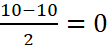
It represents zero.
Q.2: If the product of two whole numbers is
zero, can we say that one or both of them will be zero? Justify through
examples.
Ans :
If the product of 2 whole numbers is
zero, then one of them is definitely zero.
For example, 0 × 2 = 0 and 17 × 0 = 0
If the product of 2 whole numbers is
zero, then both of them may be zero.
0 × 0 = 0
However, 2 × 3 = 6
(Since numbers to be multiplied are non-zero,
the result of the product will also be non-zero.)
Q.3: If the product of two whole numbers is
1, can we say that one of both of them will be 1? Justify through examples.
Ans :
If the product of 2 numbers is 1, then
both the numbers have to be equal to 1.
For example, 1 × 1 = 1
However, 1 × 6 = 6
It shows that the product of two whole
numbers will be 1 in the situation when both numbers to be multiplied are 1.
Q.4: Find using distributive property:
(a) 728 × 101
(b) 5437 × 1001
(c) 824 × 25
(d) 4275 × 125
(e) 504 × 35
Ans :
(a) 728 × 101
= 728 × (100 + 1)
= 728 × 100 + 728 × 1
= 72800 + 728 = 73528
(b) 5437 × 1001
= 5437 × (1000 + 1)
= 5437 × 1000 + 5437 × 1
= 5437000 + 5437 = 5442437
(c) 824 × 25
= (800 + 24) × 25
= (800 + 25 − 1) × 25
= 800 × 25 + 25 × 25 − 1 × 25
= 20000 + 625 − 25
= 20000 + 600 = 20600
(d) 4275 × 125
= (4000 + 200 + 100 − 25) × 125
= 4000 × 125 + 200 × 125 + 100 × 125 − 25 ×
125
= 500000 + 25000 + 12500 − 3125
= 534375
(e) 504 × 35
= (500 + 4) × 35
= 500 × 35 + 4 × 35
= 17500 + 140 = 17640
Q.5: Study the pattern:
1 × 8 + 1 = 9
12 × 8 + 2 = 98
123 × 8 + 3 = 987
1234 × 8 + 4 = 9876
12345 × 8 + 5 = 98765
Write the next two steps. Can you say
how the pattern works?
(Hint: 12345 = 11111 + 1111 + 111 + 11
+ 1).
Ans :
(i) 123456
× 8 + 6
= 987648 + 6
= 987654
(ii) 1234567 × 8 + 7
= 9876536 + 7
= 9876543
The pattern works as follows.
123456 = 111111 + 11111 + 1111 + 111 +
11 + 1,
123456 × 8
= (111111 + 11111 + 1111 + 111 + 11 + 1) × 8
= 111111 × 8 + 11111 × 8 + 1111 × 8 + 111 × 8 + 11
× 8 + 1 × 8
= 888888 + 88888 + 8888 + 888 + 88 + 8 = 987648
∴ 123456 × 8 + 6 = 987648 + 6 = 987654
End of Questions